

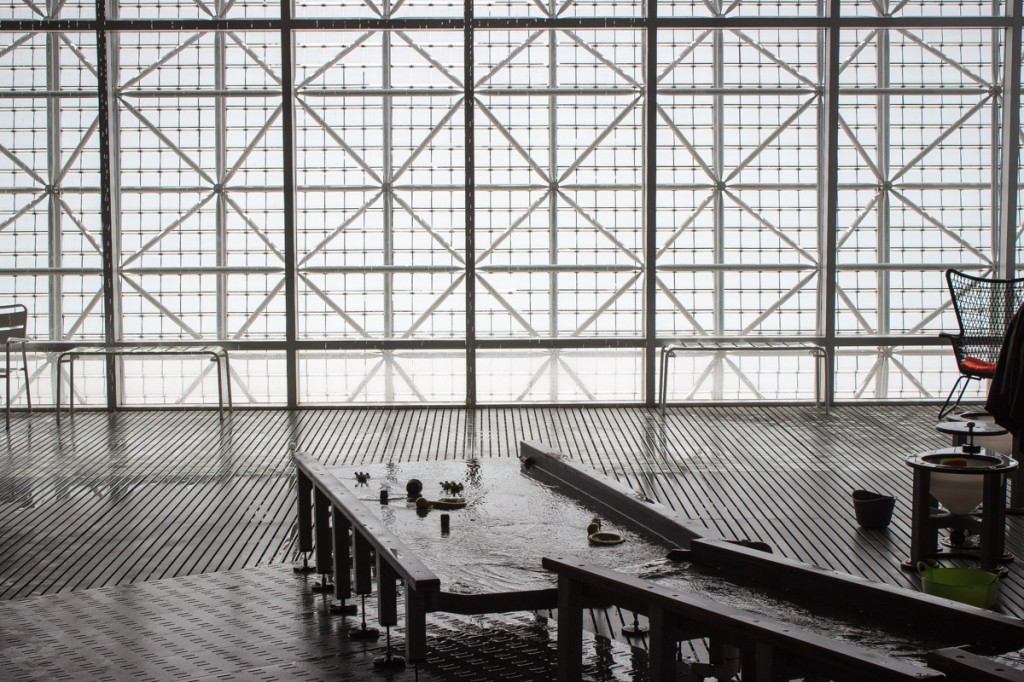
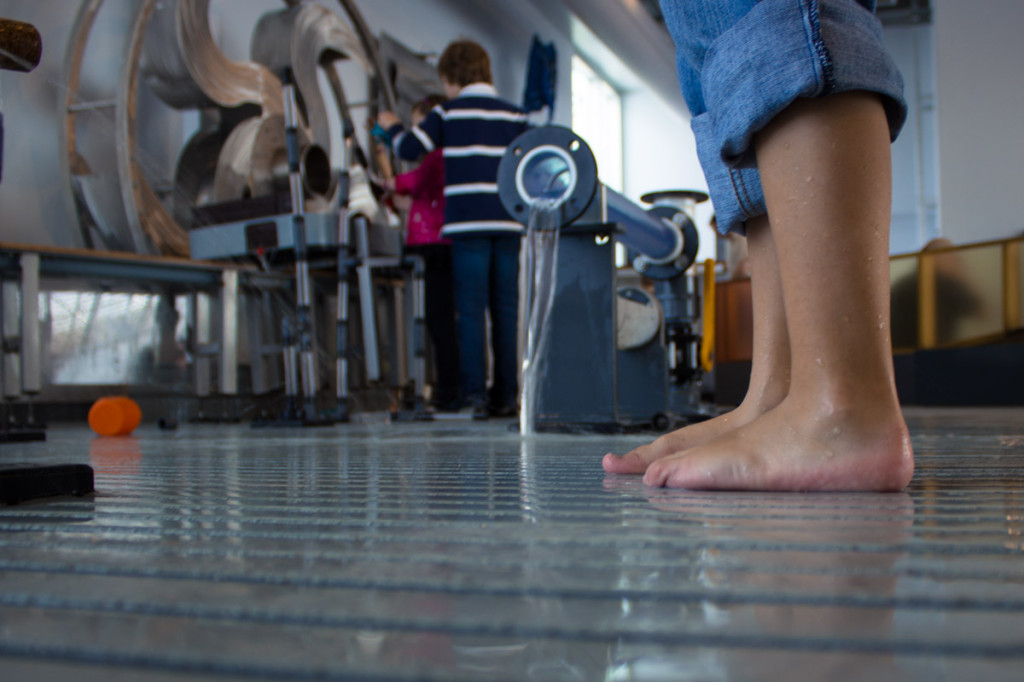
It’s been a year since the Children’s Museum re-opened their 3rd floor Waterplay area after a huge renovation. The space explores concepts such as pumping, circulating, raining, channeling, spraying, and melting through various installments. The water features fall in line with the Museum’s mission to allow visitors to “play with real stuff.”
Current research has given parents, caregivers and teacher insight into how important play really is. Play allows children to learn about themselves and how to make sense of the world around them. They’re lifting, dropping, taking turns, looking, pouring, bouncing, hiding, building, measuring and learning! As parents, we can enable play by allowing children to experiment, letting them explore their environment and getting downright messy. Waterplay is a great way to engage children.
The next time you visit the Children’s Museum, see if you can spot the ways in which your children are learning.
Language
While the 3rd floor is filled with laughter, you’ll also notice some pretty amazing describing words floating around. Listen as the children explain how to water is flowing, falling, moving, spinning and drying. How will they describe what they’re feeling? Will it be warm, cold, damp, dry, wet, heavy, light, etc. Children will want to talk to parents and tell them what they’re seeing and experiencing.
Problem Solving
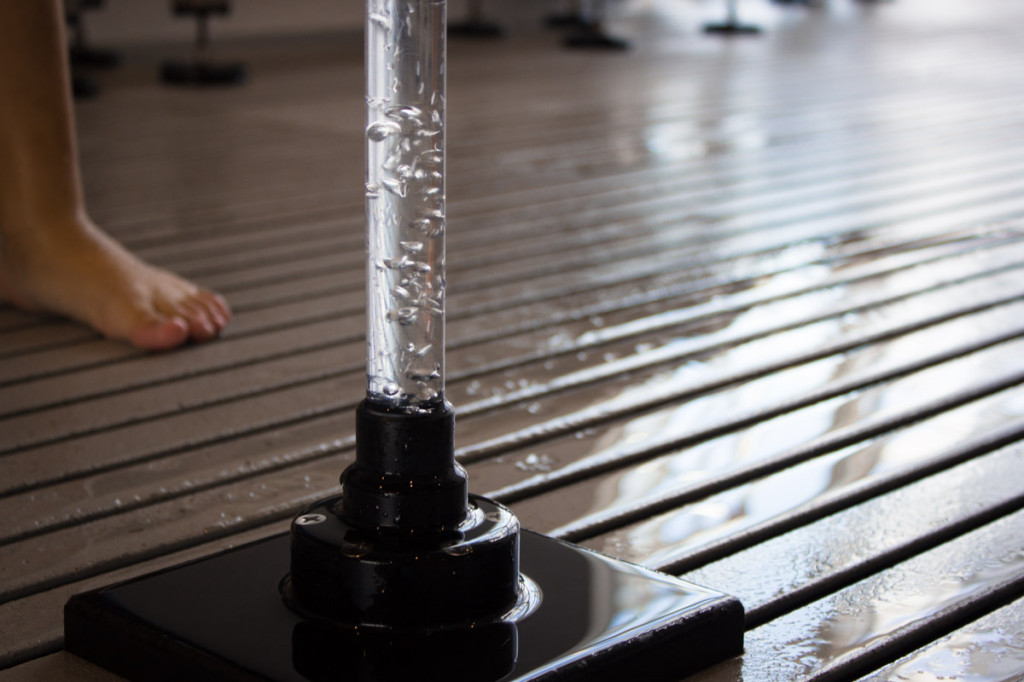
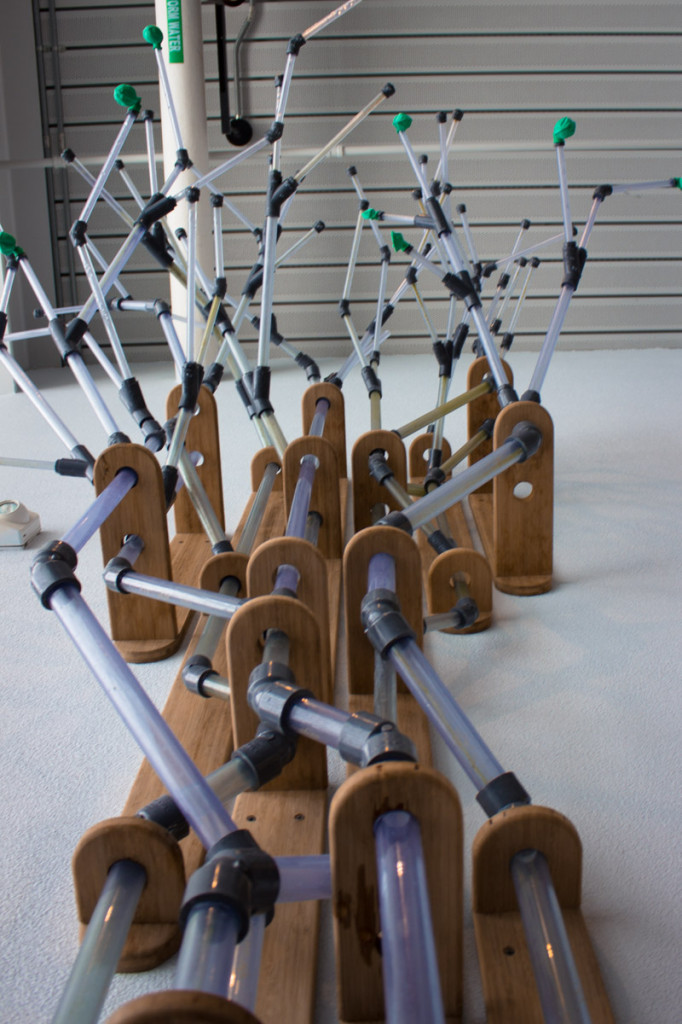
From toddlers to school-agers, there are so many ways children can manipulate the different materials in the exhibits. Toddlers will enjoy splashing their hands in the water and using all the given objects to explore which ones sink and which ones float. There are also plenty of containers for pouring, squirting and measuring. Pumps, leavers and tubes can be put together and pulled apart to make waterways that flow and sprinkle water. This is a great team effort among the children in the area – usually working together to build a design or create a function.
Math
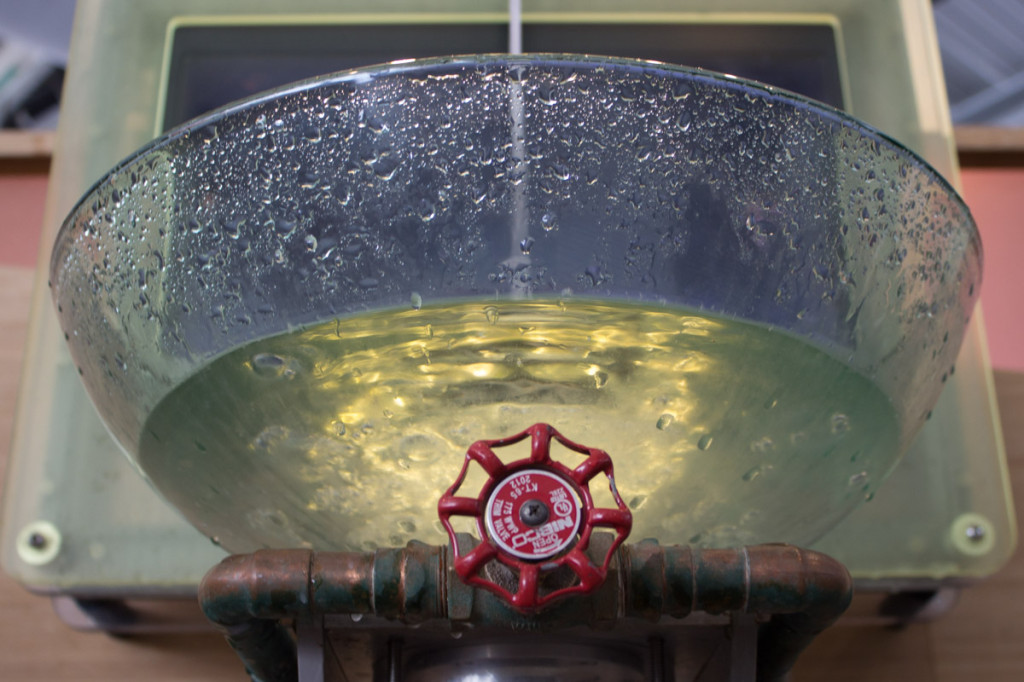
When you first enter the 3rd floor, you’ll immediate see an inviting table glowing with soft hues of blue, pink, orange and yellow. On this table, visitors are welcome to play with freshly ground ice. Children can use trays, nets and cups to discover changes in states as they watch the ice melt to water. Nearby, there’s also a really fun water funnel that explores the principles of physics and gravity as water flows quickly around the tube, catching and pulling objects that eventually get spit out at the bottom.
Social and Emotional
During our most recent visit, I witnessed approximately seven children from the ages of about 3 to 12 work together to take water from the 7-ft Water Mover and have it independently move through pipes to make it shoot through a sprinkler on the opposite side. The children were working together to collect the appropriate pieces, using trial and error and eventually succeeding as a team.
Waterplay can be a relaxing sensory experience for children of all ages. I’ve even seen adults dip their hands in the water and just watch as the water flows through their fingers and over their hands.
Physical
Children will be developing of motor skills through pouring, lifting, squeezing, dropping, and squirting. While waterplay can sometimes be slippery, the Children’s Museum has taken precautions and applied a grippy material that prevents visitors from slipping and falling; whether they’re catching raindrops or dogging sprinklers.